
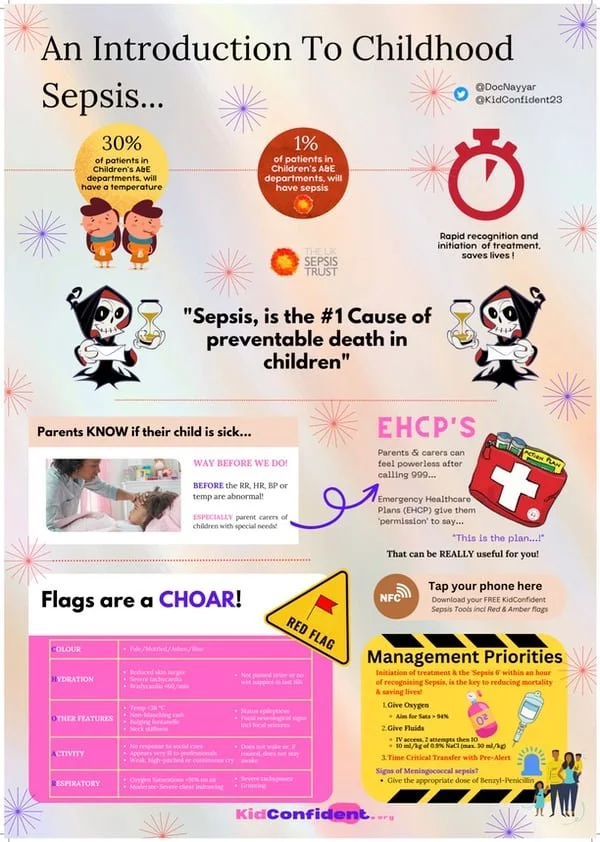
Introduction to Childhood Sepsis
Introduction to childhood sepsis
The first, most popularly requested topic for a KidConfident poster, was Childhood Sepsis. It's too big for a single poster, so welcome to the first of a poster mini-series covering childhood sepsis.
A gentle introduction to the subject, looking at why it is important, some concerning features to look out for, and what the guidelines and evidence suggest our pre-hospital management priorities should be.
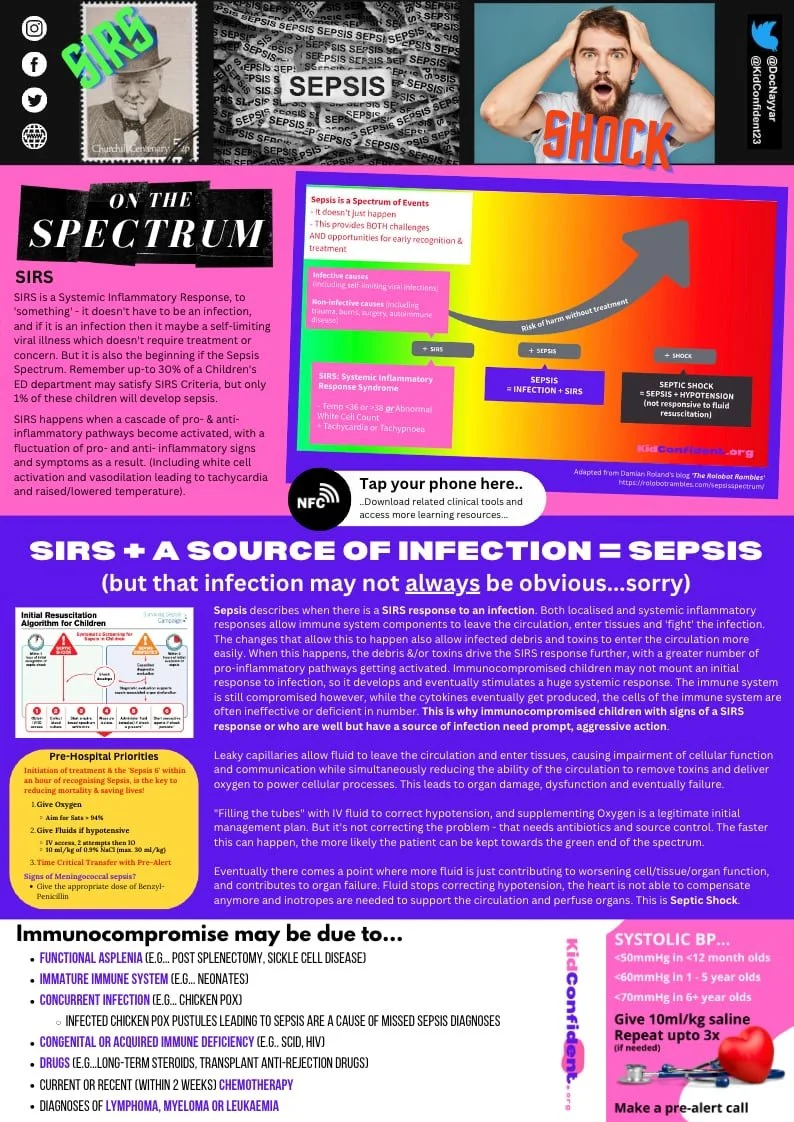
SIRS, Sepsis, Shock: The Sepsis Spectrum
SIRS, Sepsis, Shock - The Sepsis Spectrum
Sepsis is a spectrum disease starting with an inflammatory response, which becomes driven by infected debris and pathogenic toxins entering the circulation. Without treatment, this results in fluid shifts from the circulation into tissue spaces resulting in organ dysfunction and failure.
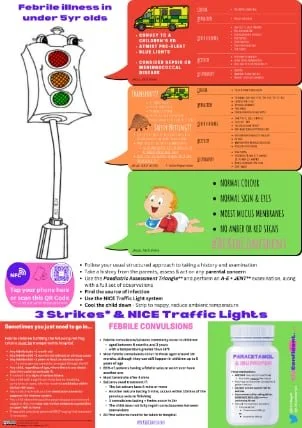
Febrile Illness In The Under 5's
The world is full of snotty kids with temperatures. Upto 30% of an average Children's emergency department can have a temperature at any one time, but less than 1% of them will develop a serious illness. Contrary to that, we hear stories of "missed sepsis" in infants and stories of repeat presentations with non-specific symptoms leading to reassurance before the child suddenly deteriorates or dies.
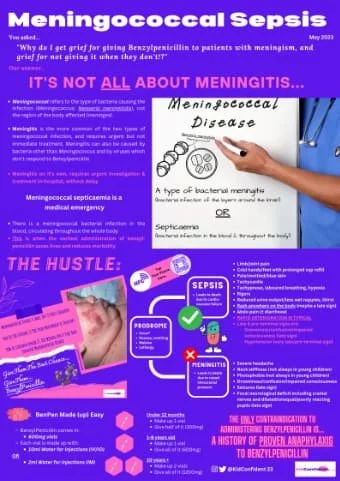
Meningococcal Sepsis
Answering a question sent via one of our posters - and a theme from @DocNayyar's surveys... why is it always wrong when you mention benzylpenicillin during patient handover? Surely Meningococcal sepsis is from meningitis? Why wouldn't it be?
Stop getting blasted for not-giving antibiotics & for giving antibiotics & stop the guesswork!
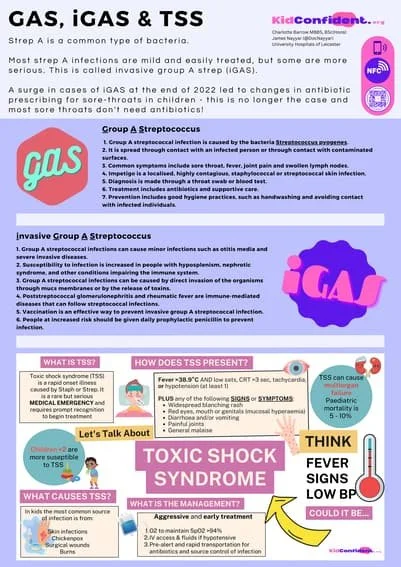
GAS, iGAS & TSS...who and what now?
Group A Streptococcal (GAS) infections are caused by a bacterium called Streptococcus pyogenes. These bacteria are commonly found in the throat and on the skin of healthy people, but they can cause a range of infections, from mild illnesses such as strep throat and impetigo to more serious infections such as necrotizing fasciitis (flesh-eating disease) and toxic shock syndrome (TSS).