
GAS, iGAS & TSS...who and what now?
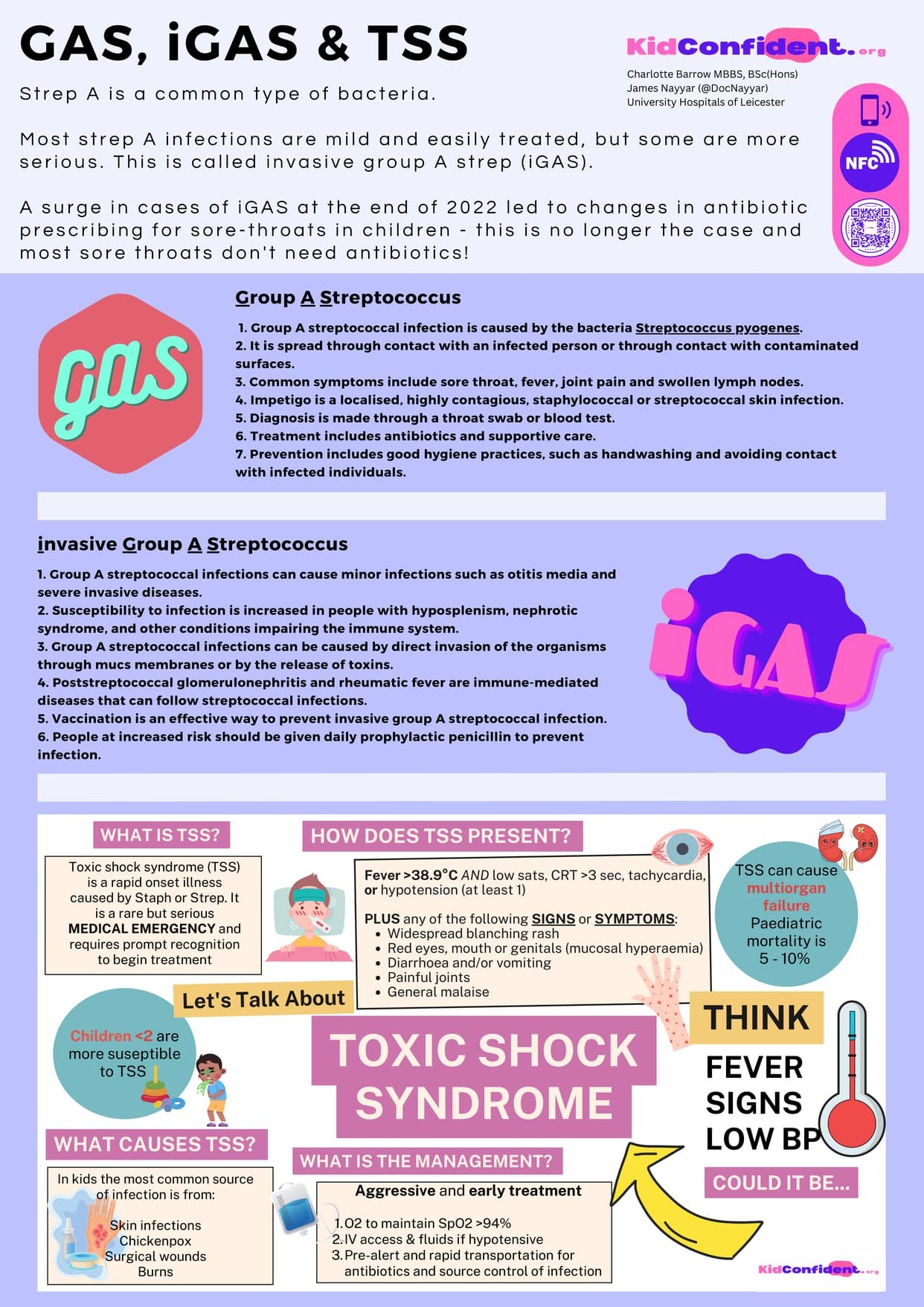
Group A Streptococcal Infections in Children
Group A Streptococcal (GAS) infections are caused by a bacterium called Streptococcus pyogenes. These bacteria are commonly found in the throat and on the skin of healthy people, but they can cause a range of infections, from mild illnesses such as strep throat and impetigo to more serious infections such as necrotizing fasciitis (flesh-eating disease) and toxic shock syndrome (TSS).
While GAS infections can affect people of all ages, children are particularly susceptible to these infections. This is because their immune systems are not fully developed, and they are more likely to come into contact with the bacteria through close contact with other children at school or daycare.
Understanding Group A Streptococcal Infections & toxic shock syndrome in Children
GAS infections can affect different parts of the body, including the throat, skin, and soft tissues. Symptoms of GAS infections can vary depending on the type of infection, but they can include fever, sore throat, rash, and swelling.
One of the most serious complications of invasive GAS (iGAS) infections is toxic shock syndrome (TSS), which can occur when the bacteria produce toxins that enter the bloodstream and cause an overwhelming immune response. TSS can cause fever, low blood pressure, and organ failure. It is life-threatening if not treated promptly.
Priorities for Pre-Hospital Clinicians
When responding to cases of GAS infections in children, the priorities are no surprise:
- Airway, breathing, Circulation
- Oxygen and intravenous fluids if necessary, along with a Time critical transfer and pre-alert for further care.
-Children with iGAS infections and TSS require close monitoring and supportive care, including respiratory and inotropic support. The potential for rapid decline means it is really important to do the basics well, and efficiently transfer the child to somewhere organ support can be initiated if required.
Clinicians should take steps to prevent the spread of the infection, and wear basic personal protective equipment (PPE).
Paramedics and pre-hospital clinicians play a vital role in providing initial treatment and transport for children with these infections. By understanding the signs and symptoms of GAS infections and TSS and responding to them appropriately, you can help to improve outcomes for children with these conditions.
