
Febrile Illness In The Under 5's
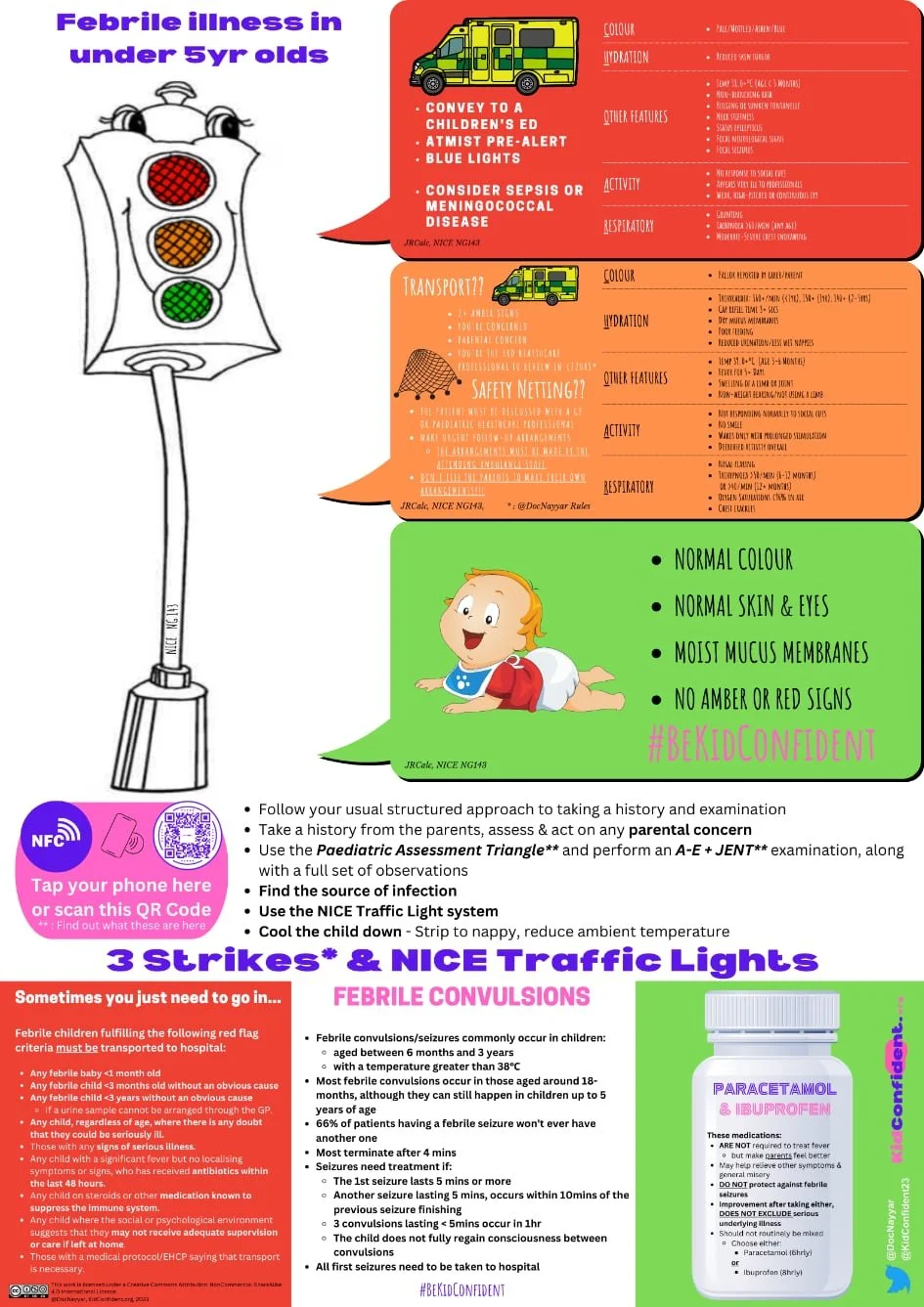
The world is full of snotty kids with temperatures. Upto 30% of an average Children's emergency department can have a temperature at any one time, but less than 1% of them will develop a serious illness. Contrary to that, we hear stories of "missed sepsis" in infants and stories of repeat presentations with non-specific symptoms leading to reassurance before the child suddenly deteriorates or dies.
That's scary! How do we get round this issue of identifying those who need a bit more attention? The KidConfident team like the NICE Traffic light system, with its built-in safety netting for those who we leave at home (so do JRCALC). Combine that with @DocNayyar's KidConfident "3 strikes rule" and we have the beginnings of a structure for some safe and sensible decision making, helping the patient AND the system.
With a whole LOAD of supplementary material available through the NFC chip and now also a QR code, including:
- A guide to sources of infection
- An interactive Paediatric Triangle Tool + a linked DTFB tutorial explaining how to use it + a version to download & keep handy
- The KidConfident A-E+JENT examination
- What's the deal with febrile convulsions and high temperatures?
- Explaining the 3 strikes rule: Why listening to and acting on parental concern makes such a difference, featuring the excellent & thought provoking A Mother Without A Child blog by Melissa Mead MBE of UK Sepsis Trust. This provides a very useful illustration of how our fears surrounding febrile infant illnesses can play out - an opportunity to learn, from a situation that ended in the worst possible way, so that you are better informed and empowered to act on your clinical suspicions and 'gut-feeling' when things are just not quite right.
A simple poster this time, with lots of additional content for you to learn from and enjoy!
If you want to read more about this subject, the JRCALC+ app and the NICE NG143 guidelines have quite a lot of interesting information - much more than just describing what to do. The NICE guideline is available in our sepsis resource collection, along with lots of other useful tutorials and learning resources, all for free!
