
SIRS, Sepsis, Shock: The Sepsis Spectrum
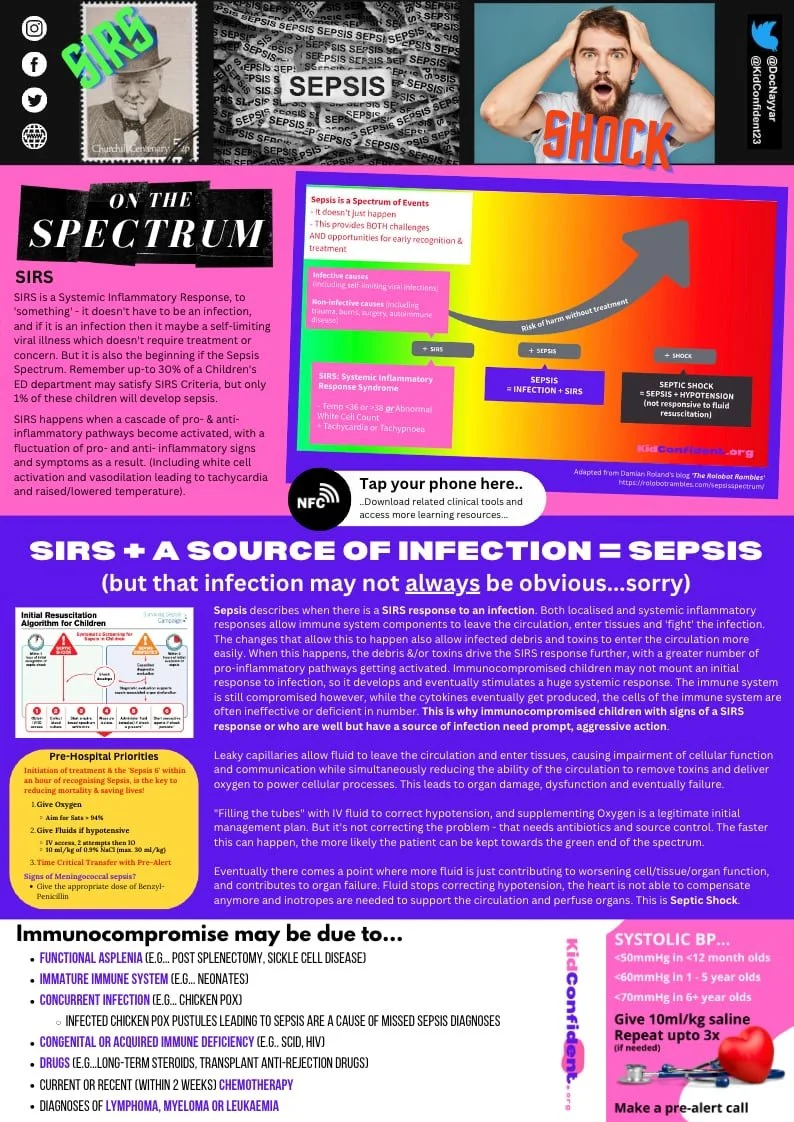
Sepsis is a spectrum disease starting with an inflammatory response, which becomes driven by infected debris and pathogenic toxins entering the circulation. Without treatment, this results in fluid shifts from the circulation into tissue spaces resulting in organ dysfunction and failure. If this continues, the ability of the heart to compensate for systemic vasodilation and maintain blood pressure diminishes beyond the point of correction with IV fluids, so that inotropes are required to maintain cardiac output and organ perfusion.
Children are at higher risk of developing pulmonary and cerebral oedema after fluid resuscitation, causing hypoxia and alterations in consciousness. 10ml/kg, 0.9% saline IV fluid boluses should only be commenced if the child is hypotensive, up-to a maximum of 40ml/kg. If the BP doesn't improve after 2 boluses (20ml/kg), you should be seeking critical care support - either from a pre-hospital advanced care team (such as EMICS or HEMS) or from an in-hospital paediatric team - whichever is quickest and safest while you give your 3rd bolus.
