
Febrile Neutropenia
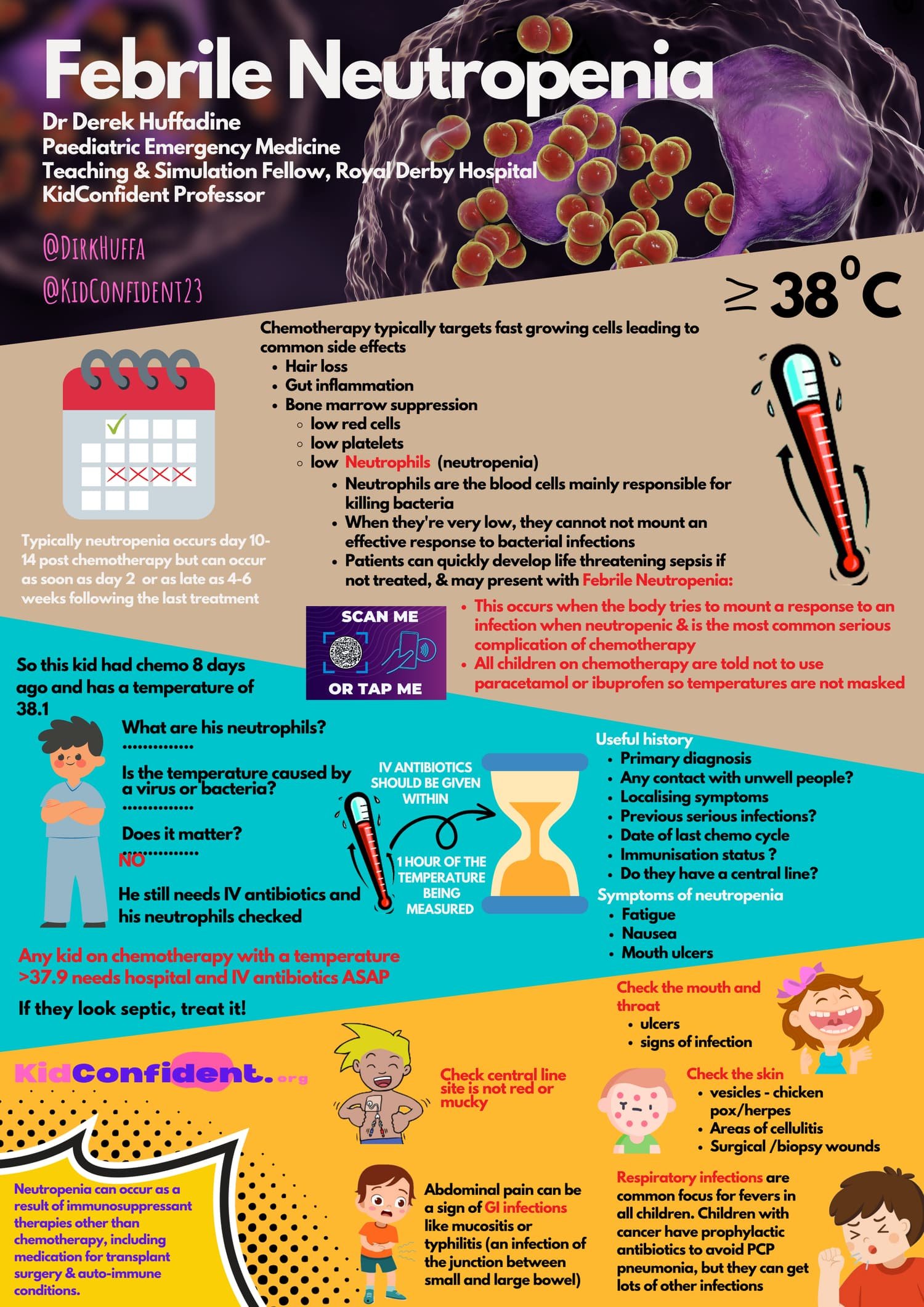
Febrile Neutropenia: Part 1 of the Childhood Cancer mini-series
Febrile neutropenia is a serious condition characterised by a high temperature and very low white blood cell count specifically neutrophils. This means the body cannot fight bacterial infections effectively. It happens most often in people having chemotherapy for cancer, but also happens if children are taking immunosuppressant drugs for other conditions such as auto-immune disease or anti-rejection drugs after a transplant.
It is very important to get treatment for febrile neutropenia quickly to avoid serious complications and achieve good outcomes - treat it like sepsis and you won't go far wrong!
Author: Dr Derek Huffadine (The KidConfident Professor)