
Choosing a Pain Assessment Tool
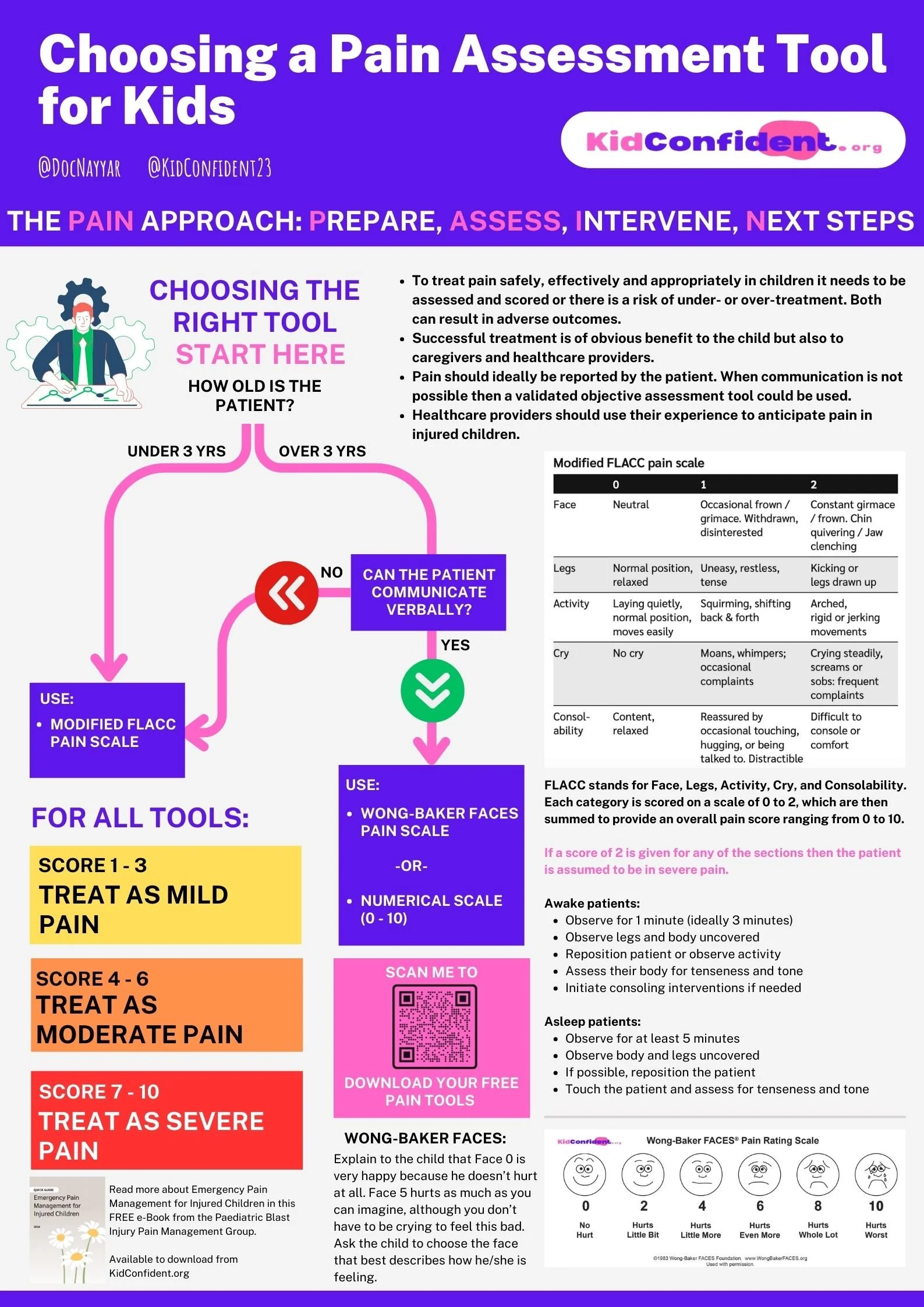
KidConfident Poster #21 | Paediatric Pain Management
How do you assess pain in a child who can't tell you how much they're hurting?
Assessing pain in children can be challenging. Some children can describe exactly how they're feeling, while others might be too young, frightened, distressed or unwell to communicate their pain.
But recognising and treating pain is one of the most important things we can do for an injured child.
Our latest KidConfident poster, Choosing a Pain Assessment Tool for Kids, provides a simple guide to selecting the right pain assessment tool for your patient.
Why is pain assessment important?
Pain is a subjective experience. It's influenced by physical, psychological, cognitive and situational factors, and no two children will experience or express it in quite the same way.
Whenever possible, we should encourage children to tell us how much pain they're experiencing. When they can't, we need another way to recognise and assess their discomfort.
Without a structured approach, there's a risk of both under-treating and over-treating pain.
Using an appropriate pain assessment tool helps us recognise pain, determine its severity, guide our interventions and, importantly, reassess whether our treatment has actually worked.
